


Mechanistic Biological Modeling

Mechanistic modeling relies on the development of mathematical and computational models describing complex interactions between observed and unobserved variables. Together with empirical data, these models can be used to suggest, test, and validate hypotheses. Such models describe, explain, and quantify the cause and effect interactions between inputs and outputs. They go beyond forecasting an outcome; they suggest the biological mechanism underlying the emergence of observed outcomes. Once validated based on experimental or empirical data, these models can be used to guide investigations and to anticipate outcome in situations where experiments are difficult or expensive.
At every scale of biology – from the interaction of molecules to the interaction of species – mechanistic mathematical and computational models have become an essential tool to elucidate emergent behavior, highlight fundamental gaps in understanding, make predictions, and design optimal experiments to test such predictions.
The Mechanistic Biological Modeling group at Virginia Tech involves investigators from many departments.
Members of the Mechanistic Biological Modeling Group

Anand Banerjee
Academy of Integrated Science
Mathematical/Computational modeling of cell cycle checkpoints.
William Baumann


Lauren Childs
Department of Mathematics
Mathematical and computational modeling of biological systems
Daniela Cimini

Stanca Ciupe

Stanca Ciupe
Department of Mathematics
Host dynamics of viral infections, theoretical immunology, and multi-scale disease modeling
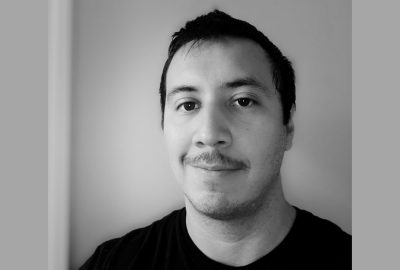
Nisha Duggal

Nisha Duggal
Department of Biomedical Sciences and Pathobiology
Transmission and pathogenesis of emerging viruses
Gillian Eastwood

Silke Hauf

Dana Hawley

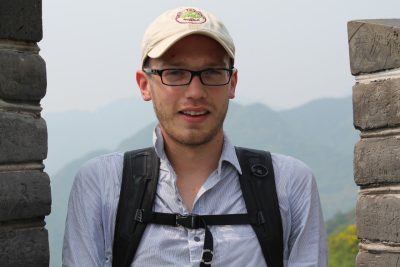
Laura Hungerford

Laura Hungerford
Department of Population Health Sciences
Using epidemiologic methods, mathematical modeling, and spatial analyses to study the risk of disease transmission
Leah Johnson

Shihoko Kojima. October 03, 2019. Fralin Life Sciences Institute. Personnel Photo. Photo Credit: Photo © Ivan Morozov, Fralin Life Sciences Institute. www.fralin.vt.edu

Pavel Kraikivski
Academy of Integrated Science
Modeling the molecular networks regulating cell growth and division
Kate Langwig

Liwu Li

Liwu Li
Department of Biological Sciences
Molecular signaling circuits modulating innate memory and inflammation

Alexey Onufriev
Departments of Computer Science and Physics
Theoretical and computational investigation of biomolecular systems, including 3D genome organization.
Cassidy Rist

Cassidy Rist
Department of Population Health Sciences
Economic evaluation of One Health approaches to infectious disease control and elimination
Omar Saucedo

Igor Sharakhov

Alexey Onufriev

Jake Tu
Department of Biochemistry
Molecular mechanisms of sex-determination in mosquitoes; Control of mosquito-borne infectious diseases by selectively targeting the biting females
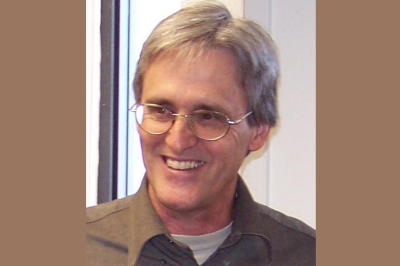
John Tyson
Department of Biological Sciences (emeritus)
Mathematical and computational modeling of molecular regulatory networks in cells

Contacts:
Daniela Cimini, cimini@vt.edu
Lauren Childs, lchilds@vt.edu
Stanca Ciupe, stanca@vt.edu
Silke Hauf, silke@vt.edu